Source Hydraulic Manual Combi Tool for Metallurgy Construction and Repair
Explore 30 listings for the Hydraulic Manual Combi Tool suitable for metallurgy, construction, and repair applications. Buyers can compare specifications like model numbers, certifications, and customization options from verified suppliers in China.
Key considerations
Products List
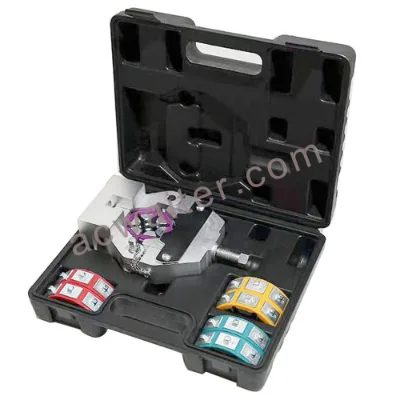


Hand Operated Hydraulic Combi Tool Earthquake Rescue Tool Hydraulic Spreader
$1150.00 - $1540.00
MOQ: 1 Pieces

Hydraulic Manual Combi Tool Lifesaving Equipment Hydraulic Cutter and Expantion
$1150.00 - $1540.00
MOQ: 1 Pieces


Hydraulic Cutting Tool Hydraulic Manual Cable Cutter Emergency Rescue Combi Tools
$1420.00 - $1540.00
MOQ: 1 Pieces


Comprehensive Sourcing Guide
Strategic Sourcing Guide for Hydraulic Manual Combi Tools
Understanding the Technical Landscape of Hydraulic Manual Combi Tools
The Hydraulic Manual Combi Tool represents a critical class of industrial equipment designed for high-force applications in metallurgy and construction sectors. Unlike purely pneumatic or electric alternatives, these manual hydraulic systems rely on human-operated pumps to generate pressure, offering a balance of portability and immense force output. When evaluating products under the core keyword, buyers must distinguish between various operational configurations. The observed market data indicates that these tools often feature a "Horizontal" structure, which is a common design choice for stability during heavy-duty crimping or pressing operations.
A primary technical differentiator is the automatic grade of the machinery. The available inventory suggests a prevalence of "Semi-Automatic" models, which require manual intervention for specific phases of the cycle, such as die loading or pressure release, while the hydraulic actuation is powered. This distinction is vital for procurement planning, as it influences operator training requirements and cycle times. Furthermore, the physical dimensions of the tool are a significant constraint in field applications. Specifications observed in the current market range from compact units to larger machines with volume dimensions approximately around 305370270(mm). Buyers must verify if the "Machine Max Opening" of 54mm aligns with the specific hose or fitting diameters they intend to process, as this limit dictates the maximum material size the tool can accommodate.
The material composition of the tool is another non-negotiable technical factor. High-performance models utilize "Special Steel" for the die material, ensuring longevity under repeated high-pressure cycles. The structural integrity of the tool is often reinforced by the inclusion of high-quality components, such as valves sourced from established manufacturing regions like Taiwan, which are known for precision engineering in hydraulic systems. The visual identification of these tools often includes a specific color coding, such as "Blue," which can serve as a quick visual marker for specific manufacturers or product lines, though this should not be relied upon as a primary quality indicator.
Compliance, Certification, and Regulatory Standards
In the global B2B procurement landscape, regulatory compliance is the first line of defense against liability and operational failure. For hydraulic manual combi tools, the presence of recognized certifications is a prerequisite for entry into many industrial markets. The observed product data explicitly lists "CE" and "ISO" as standard certifications for these units. The CE marking indicates conformity with health, safety, and environmental protection standards for products sold within the European Economic Area, while ISO certification typically refers to adherence to international quality management systems.
Buyers must exercise caution when interpreting these certifications. While some listings state the product standard is "Approved CE and ISO," others may simply list the certifications without specifying the exact ISO standard number (e.g., ISO 9001). It is the responsibility of the procurement team to verify the specific scope of the certification with the supplier. The data also highlights a "Standard" classification for some models, while others offer "Customized" standards. This distinction is crucial; a customized standard implies that the tool may be built to a specific client requirement that deviates from the baseline safety norms, necessitating a more rigorous review of the engineering drawings and safety protocols before deployment.
The origin of the product also plays a role in compliance verification. The majority of the observed inventory originates from "Zhejiang, China" or "Handan, China." While these regions are hubs for manufacturing, the specific location does not guarantee compliance. Buyers should request the original certification documents and verify their validity with the issuing bodies. Additionally, the "Warranty" period of "1 year" is a standard offering observed in the current market, which serves as a baseline for after-sales support. However, the warranty terms should be scrutinized to ensure they cover the specific components most prone to failure, such as the hydraulic seals and the specialized steel dies.
Cost Drivers and Pricing Structure Analysis
The pricing structure for hydraulic manual combi tools is highly variable, reflecting the diverse range of specifications, materials, and customization options available. The observed price range spans from 1 USD to 6000 USD, a breadth that underscores the difference between simple hand tools and complex, semi-automatic hydraulic systems. This wide variance is not indicative of a single product category but rather a spectrum of capabilities. A tool priced at the lower end of this range is likely a basic manual press with standard dies, whereas a unit at the higher end may feature advanced valve systems, specialized steel components, and custom packaging.
Several key factors drive the cost of these tools. First, the "Die Material" significantly impacts the price. Tools utilizing "Special Steel" for their dies command a premium over those with standard steel components due to the enhanced durability and resistance to wear. Second, the origin of critical sub-components, such as the "Machine Valves," influences the final cost. Valves sourced from Taiwan, as noted in the product data, are generally associated with higher reliability and performance, adding to the manufacturing cost. Third, the "Packing" method is a cost driver; options range from simple "Box" packaging to "Plywood Case" or "Standard Export Plywood Case," which are necessary for international shipping and protection of heavy machinery.
The Minimum Order Quantity (MOQ) is another critical cost consideration. The market data shows an MOQ range of 1 to 1000 units. For buyers requiring a single unit for immediate deployment, the "Small Orders: Accepted" attribute is a significant advantage, allowing for an MOQ of just 1 PC. However, for large-scale procurement, negotiating a lower unit price based on volume is essential. The "Customization: Available" attribute also introduces a variable cost element. Customized tools, whether in terms of dimensions, standard compliance, or specific die configurations, will inherently carry a higher price point due to the additional engineering and setup time required.
Typical Applications and Operational Scope
Hydraulic manual combi tools are engineered for robust performance in demanding environments, with the primary usage sectors identified as "Metallurgy" and "Construction." In the metallurgy sector, these tools are essential for tasks requiring high force, such as crimping heavy-duty hydraulic hoses, pressing bearings, or assembling large mechanical components. The "Crimp Rage" observed in the market, ranging from 1/8 Inch to 1 Inch, indicates the tool's versatility in handling various hose sizes, making it suitable for a wide array of hydraulic systems used in heavy machinery and industrial piping.
In the construction industry, the portability and high force output of these tools make them indispensable for on-site repairs and assembly. The "Stroke" of 100mm and "Max. Working Length" of 270mm provide the necessary range of motion for complex assembly tasks. The "Spring Size" specifications, noted as 4-6-1/2mm, are critical for the return mechanism of the tool, ensuring consistent operation during repetitive tasks. The "Condition" of the tools is consistently listed as "New," which is a standard expectation for industrial procurement, but buyers should verify the condition upon delivery to ensure no transit damage has occurred.
The "Product Type" is broadly categorized as a "hydraulic tool," but the specific application often dictates the model selection. For instance, the "Manual Hydraulic Hose Crimping Tool" is a specific variant designed for hose assembly, while other models may be general-purpose presses. The "Year Model" of 1 suggests a recent iteration of the product line, which may incorporate updated safety features or efficiency improvements. Buyers should match the tool's specific capabilities, such as the "Punch Die" sizes of 3/8", 5/8", 1/2", and 3/4", to their operational needs to ensure compatibility with existing inventory and workflows.
Supplier Evaluation and Sourcing Strategy
Evaluating suppliers for hydraulic manual combi tools requires a multi-faceted approach that goes beyond price comparison. The "Brand Name" is a significant factor, with "Talon tools" and "Bowente" appearing in the current market data. While brand recognition can indicate a level of market presence, it should not be the sole criterion for selection. Buyers must investigate the supplier's track record, specifically their ability to deliver "Customized" products and their adherence to the stated "Standard" certifications.
The "Place of Origin" is another critical evaluation point. With products originating from "Zhejiang, China" and "Handan, China," buyers should assess the local manufacturing ecosystem. These regions are known for their industrial clusters, but the quality of individual suppliers can vary widely. It is advisable to request a factory audit or a detailed video tour to verify the production capabilities and quality control processes. The "prod_packing" details, such as "Plywood Case" or "Carton," can also serve as an indicator of the supplier's attention to detail and logistics readiness.
Furthermore, the "Small Orders: Accepted" attribute suggests a supplier's flexibility, which is beneficial for buyers testing the market or requiring small batches. However, for larger orders, the supplier's capacity to scale production without compromising quality must be verified. The "Customized" nature of some products implies a closer working relationship with the supplier, requiring clear communication channels and defined project timelines. Buyers should also check the "Warranty" terms, ensuring that the 1-year warranty is comprehensive and that the supplier has a clear process for handling claims and repairs.
Quality Control and Long-Term Procurement Considerations
Quality control is paramount when sourcing hydraulic manual combi tools, given the high forces involved and the potential safety risks. The "Die Material" of "Special Steel" and the "Machine Valves" from Taiwan are indicators of quality, but these must be verified through third-party testing or on-site inspection. Buyers should establish a quality control protocol that includes visual inspections, dimensional checks, and functional testing upon receipt of the goods. The "Standard Export Plywood Case" packaging is a good sign, but the internal protection of the tool must be sufficient to prevent damage during transit.
Long-term procurement considerations extend beyond the initial purchase. The "Warranty" of 1 year is a standard baseline, but buyers should negotiate extended warranty options or service level agreements (SLAs) for critical applications. The availability of spare parts, such as replacement dies and seals, is essential for maintaining operational continuity. The "Customization: Available" attribute suggests that suppliers may offer tailored support, but this should be formalized in the procurement contract.
Additionally, the "Automatic Grade" of "Semi-Automatic" implies a need for ongoing operator training. Buyers should plan for training programs to ensure that operators can safely and efficiently use the tools. The "Structure" being "Horizontal" is a design feature that should be considered in the layout of the workspace to optimize workflow and safety. Finally, the "Condition" of the tool should be monitored over time, with regular maintenance schedules established to extend the lifespan of the equipment and ensure consistent performance.
Comparative Analysis of Product Specifications
To facilitate informed decision-making, the following table summarizes key specifications observed in the current market for hydraulic manual combi tools. This comparison highlights the diversity in model numbers, dimensions, and features, allowing buyers to align their specific requirements with available options.
| Feature Category | Model TL-507 / TL-508 | Model HHM-70 | Model KM-92S-A | Model LD-C01012 |
|---|---|---|---|---|
| Brand Name | Talon tools | Bowente | Bowente | N/A |
| Product Type | Hydraulic pressure tool | Hydraulic tool | Manual Hydraulic Hose Crimping Tool | Hydraulic Tool |
| Structure | Standard | Horizontal | Horizontal | Standard |
| Max Opening | N/A | N/A | 54mm | N/A |
| Crimp Range | N/A | N/A | 1/8 Inch to 1 Inch | N/A |
| Die Material | N/A | N/A | Special Steel | N/A |
| Valve Origin | N/A | N/A | From Taiwan | N/A |
| Weight | N/A | N/A | 26.5kg | N/A |
| Dimensions | Standard | N/A | 305370270(mm) | N/A |
| Certification | CE, ISO | CE, ISO | Approved CE and ISO | N/A |
| Packing | Plywood Case | Box | Standard Export Plywood Case | Carton |
| Origin | Zhejiang, China | Handan, China | Handan, China | China |
| MOQ | 1 PC | 1 PC | 1 PC | 1 PC |
This table illustrates that while core features like certification and origin are consistent, specific dimensions, weights, and packaging vary significantly. Buyers must carefully cross-reference these specifications with their operational needs to select the most appropriate tool. The presence of "Customized" options in some models further emphasizes the need for a detailed requirements analysis before finalizing a purchase. By adhering to these evidence-based guidelines, buyers can navigate the complex landscape of hydraulic manual combi tools with confidence and precision.
FAQs
What certifications do hydraulic manual combi tools typically have?
These tools typically hold CE and ISO certifications to meet international safety standards. Buyers should verify the specific ISO standard number, as some listings only state the certification without detailing the scope or exact compliance requirements.
Can I order small quantities of hydraulic manual combi tools?
Yes, small orders are accepted with a minimum order quantity of just one piece. This flexibility allows buyers to test the product or fulfill immediate needs without committing to large bulk purchases or high inventory costs.
Which die materials are used in these hydraulic tools?
High-performance models utilize special steel for the die material to ensure longevity under high pressure. This material choice enhances durability and resistance to wear compared to standard steel components found in lower-cost units.
How are these hydraulic tools packaged for shipping?
Packaging options range from simple boxes to standard export plywood cases for heavy machinery. The choice of packaging depends on the product model and ensures protection during international transit from origins like Zhejiang or Handan in China.
What is the warranty period for hydraulic manual combi tools?
The standard warranty period for these tools is one year from the date of purchase. Buyers should review the terms to ensure coverage includes critical components like hydraulic seals and specialized steel dies prone to failure.
Where are these hydraulic tools manufactured?
Most observed inventory originates from manufacturing hubs in Zhejiang and Handan, China. While these regions are known for industrial clusters, buyers should verify specific factory capabilities and quality control processes before placing large orders.